Judaism, Truth, and the Difference Between Covenant and Conquest
Why Judaism Never Became a Universal Missionary Empire Like Christianity or Islam

Introduction
One of the most persistent misconceptions about religion is the assumption that all major faiths understand “truth” in the same way. People often speak about Judaism, Christianity, and Islam as if they are merely different versions of the same theological structure. They are not. While all three traditions are rooted historically in the ancient Near East and all make claims about divine revelation, prophecy, morality, and human purpose, their relationship to truth, conversion, salvation, and universal obligation differs profoundly.

Christianity and Islam evolved into universal missionary systems. Both developed expansive theological frameworks claiming that ultimate truth and salvation require adherence to their specific revelation. Christianity centered this around belief in Jesus as the son of God, and the messiah. Islam centered it around the finality of Muhammad’s revelation and the submission of humanity to Allah through Islam. Both traditions therefore developed strong universalist impulses. Their theological logic naturally pushed outward toward conversion, expansion, and the eventual transformation of humanity into a single religious civilization.
Judaism took a very different path. Judaism unquestionably claims that the God of Israel is real, that revelation occurred, and that the Torah represents a covenantal relationship between God and the Jewish people. But Judaism historically did not conclude from this that all human beings must become Jews in order to live righteous lives or attain divine favor. That distinction fundamentally shaped Jewish civilization, Jewish law, Jewish attitudes toward outsiders, and Jewish survival itself.
Understanding this difference requires examining not only theology, but the deeper architecture of the Jewish worldview.
Judaism’s Truth Claims
Modern people sometimes attempt to soften Judaism into a vague ethical humanism in order to make it fit contemporary pluralism. That is historically inaccurate. Classical Judaism absolutely believed that certain things are true and certain things are false.
The Torah does not present itself as metaphorical poetry detached from reality. It presents itself as covenantal revelation. The God of Israel is described not merely as a tribal deity but as the creator of the universe. The Exodus narrative, Sinai revelation, prophetic tradition, covenantal obligations, and moral structure of Torah are presented as historical and theological truths.

Rabbinic Judaism continued this framework. The rabbis rejected idolatry, criticized pagan worship, and sharply disagreed with theological doctrines they considered erroneous. Medieval Jewish thinkers wrote entire philosophical works defending monotheism against competing religious systems.
The Rambam, for example, argued forcefully that God is incorporeal, indivisible, eternal, and beyond physical form. From that perspective, doctrines such as incarnation or divine embodiment were not merely “different traditions.” They were theological errors.
Judaism therefore never embraced relativism in the modern sense. It did not teach that every religion is equally true or equally valid. The rabbis frequently distinguished between truth and falsehood, holiness and idolatry, revelation and invention. But the crucial distinction is this: Judaism did not universalize Jewish obligation.
The Covenant Was Particular, Not Universal
The Torah repeatedly frames Israel’s relationship with God as a covenant with a specific people. At Sinai, the Israelites are commanded to become “a kingdom of priests and a holy nation.” The language is deeply important. Priests do not exist for themselves alone. They serve a function within a larger human structure. Ancient Judaism therefore saw Israel as bearing a distinctive covenantal role, not as abolishing the spiritual legitimacy of every non-Jew on earth.
This produced one of the most important differences between Judaism and later universal religions: righteousness was never limited exclusively to Jews. Rabbinic Judaism formalized this through the concept of the Noachide laws. According to classical Jewish thought, non-Jews were not expected to observe the entire Torah. They were not obligated in Shabbat, kashrut, tefillin, sukkot, or the hundreds of covenant-specific commandments that define Jewish life. Instead, humanity at large was expected to uphold basic moral and civilizational principles: these were prohibitions against murder, theft, idolatry, sexual violence, blasphemy, cruelty, and social chaos, along with the obligation to establish systems of justice. This framework allowed Judaism to maintain both theological confidence and civilizational coexistence.
A non-Jew who lived morally and rejected barbarism could still be regarded as righteous. The Talmud and later rabbinic tradition explicitly recognize “the righteous among the nations” as having a share in the World to Come. That is an extraordinary theological statement when viewed in historical context. It means that Judaism did not require humanity to become Jewish in order to be acceptable to God. And that alone separates Judaism sharply from many classical Christian and Islamic formulations.
Judaism Did Not Build a Conversion Empire
The difference becomes even clearer when examining attitudes toward conversion. Christianity and Islam historically developed powerful missionary structures. Christianity spread through preaching, empire, theological universalism, and eventually global evangelism. Islam spread through a combination of preaching, military expansion, governance systems, trade networks, and religious integration. Judaism did none of this on a comparable civilizational scale.
In fact, rabbinic Judaism often made conversion intentionally difficult. Prospective converts were traditionally questioned carefully and warned about the burdens of Jewish life. The Talmud describes rabbis asking candidates why they wished to join a historically persecuted and heavily obligated people.
This makes little sense under a theology claiming that eternal salvation depends exclusively on conversion to Judaism. Religions that believe all outsiders are eternally doomed generally do not discourage potential converts. Judaism instead viewed conversion as sincere covenantal entry into a demanding national-religious framework, not as a mass recruitment campaign.
Historically, Jews also lacked the theological drive to erase all competing civilizations. There were no Jewish equivalents of global missionary crusades, universal caliphates, or organized campaigns to convert entire continents.
There were exceptions. The Hasmonean period included forced conversions of some neighboring populations such as the Idumeans. The major forced conversion associated with the Hasmonean period occurred under John Hyrcanus, who ruled roughly from 134 BCE to 104 BCE. Around 125–110 BCE, Hyrcanus conquered Idumea (Edom), the region south of Judea inhabited by the Idumeans/Edomites. According to the Jewish historian Josephus in Antiquities of the Jews (Book 13), Hyrcanus offered the Idumeans a choice: either leave the territory or adopt Jewish law, including circumcision. Many accepted conversion in order to remain on their land.
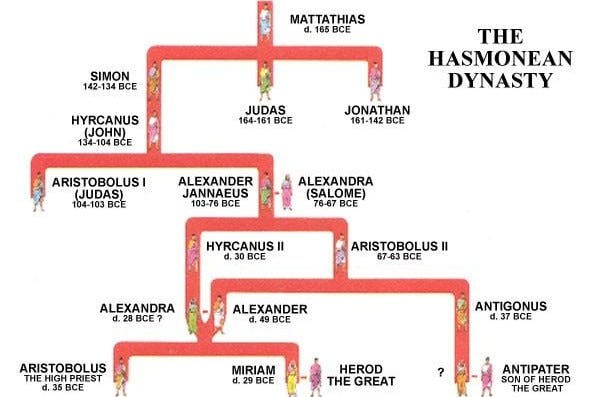
This was not a centuries-long continuous policy under many kings. It appears to have been a relatively limited political and territorial policy tied to Hasmonean state expansion during the late 2nd century BCE. The Hasmonean kingdom itself lasted roughly a century from the Maccabean revolt in the 160s BCE until Roman domination in 63 BCE, when Pompey entered Jerusalem. Indeed, much of Jewish history unfolded under conditions where Jews themselves were minorities subject to forced conversion by others.
The Jewish Relationship to Wisdom Was More Complex Than People Realize
Another major difference lies in Judaism’s historical attitude toward wisdom outside its own boundaries. Contrary to simplistic caricatures, Judaism often acknowledged that truth and wisdom can exist among non-Jews. The rabbinic statement in Eicha Rabbah famously declares: “If someone tells you there is wisdom among the nations, believe it.” That statement is astonishingly sophisticated for the ancient world.
The rabbis distinguished between Torah and wisdom. Torah represented covenantal revelation and divine law specific to Israel. Wisdom, however, could emerge from observation, philosophy, mathematics, medicine, governance, engineering, and human experience across civilizations.
This distinction allowed many Jewish thinkers to engage broader intellectual culture without abandoning Judaism itself. Throughout history, Jews studied astronomy, medicine, mathematics, logic, commerce, linguistics, and philosophy from surrounding societies. Jewish civilization absorbed influences from Babylonian, Persian, Greek, Arab, and European intellectual worlds while still maintaining its internal religious identity. Again, the Rambam serves as an important example. He deeply engaged Aristotelian philosophy, Islamic intellectual traditions, medicine, and logic while remaining thoroughly committed to halachic Judaism.
This did not mean Judaism regarded all religious doctrines as equally valid. It did mean Judaism did not assume that every insight outside Torah was spiritually contaminated. That distinction matters enormously.
Christianity and Islam Universalized Revelation
Christianity and Islam transformed the idea of revelation into universal theological obligation. Christianity interpreted the covenant through Jesus and ultimately expanded beyond Jewish national identity into a religion aimed at all humanity. The Great Commission in the New Testament explicitly commands disciples to spread the faith to all nations. Salvation increasingly became linked to belief in Christ.
Islam similarly framed itself as the final and complete revelation for humanity. Muhammad was understood not merely as a prophet to the Arabs but as the seal of prophecy for all mankind. The Quran repeatedly calls humanity toward submission to Allah through Islam. These theological structures naturally encouraged expansion.
Both religions therefore developed strong universalist and missionary identities. Over centuries, these systems became intertwined with empire, law, conquest, trade, political legitimacy, and civilizational competition. Judaism never developed that architecture. Jewish identity remained tied to peoplehood, covenant, law, ancestry, memory, and communal continuity rather than global religious conquest. That difference profoundly shaped Jewish history.
The Jewish Goal Was Survival and Sanctification, Not Domination
Judaism’s primary historical project was not converting the world. It was surviving while preserving a covenantal civilization under often hostile conditions. Jewish law focused intensely on communal continuity, ethical conduct, ritual life, learning, memory, and sanctification of ordinary existence. The central Jewish question was rarely “How do we conquer the world?” but rather “How do we remain faithful while living inside empires larger than ourselves?”
This produced a civilization oriented around study, law, argumentation, ritual practice, family continuity, and communal resilience rather than imperial missionary expansion. Even messianic visions in Judaism generally imagined a future where nations recognize God voluntarily, not necessarily where everyone becomes ethnically or ritually Jewish. The prophets envision moral transformation, justice, peace, and recognition of divine sovereignty. They do not typically describe the abolition of all nations into a single Jewish identity. That distinction again separates Judaism from later universalist religious systems.
Conclusion
Judaism believes in revelation, covenant, divine law, moral obligation, and the reality of the God of Israel. It rejects idolatry and historically disputed theological doctrines it considered false. But Judaism historically stopped short of claiming that every human being must become Jewish in order to attain righteousness, divine favor, or eternal meaning. That single distinction changed everything.
Christianity and Islam became universal missionary civilizations built around the expansion of revelation to all humanity. Judaism remained fundamentally covenantal, particularist, and nation-centered while still recognizing the moral and spiritual legitimacy of all righteous non-Jews.
In practice, this created a religion less focused on conquest than continuity, less focused on universal conversion than communal sanctification, and less focused on saving the world through membership than on elevating the world through ethical monotheism and covenantal responsibility.
Judaism therefore occupied a unique historical position: deeply confident in its own truth claims, yet remarkably restrained in imposing them upon all humanity.
Invading, occupying, forcedly converting and all other crimes that are still going on are missionary and universality ??
Agree with everything except this.